~BLOG

Inside the Mind of a Collegiate Golfer: The Mental Health of Female Student-Athletes

Behind the calm and centered demeanor of the golfer standing over the golf ball is a hidden world that very few people will understand. Collegiate golf requires not just the athletic skill to hit the white golf ball accurately and consistently, but it also demands emotional and mental control. Despite its reputation as a quiet and relaxed sport, female collegiate golfers often experience intense psychological pressure while on the course. This intense pressure can be created by having to balance their academics, athletics, and their own personal needs. Now more than ever, the mental health challenges faced by female athletes demand greater attention. Their struggles deserve to be seen and heard instead of being hidden behind the scenes.

Unlike many team sports, golf is mainly an individual sport. Every shot that the golfer makes shows their preparation, confidence, and mental skill. A poor shot that a golfer hits cannot be saved by their teammates. The final outcome of the score is personal because each result reflects the golfer’s individual performance. According to the National Collegiate Athletic Association (NCAA), approximately 69% of student-athletes report feeling overwhelmed by managing their coursework along with their athletic commitments. In addition, female athletes often experience increased pressure due to scholarship expectations, demanding travel schedules, and the need to maintain academic eligibility while competing.

Research shows that college athletes deal with anxiety and stress just as much as, or even more than, other college students. In 2022, there was an NCAA Student-Athlete Well-Being Study that found that nearly one in three female student-athletes experienced mental exhaustion. Some of these student-athletes have reported that they have difficulty maintaining a healthy sleep schedule during the season. Due to mental fatigue, many athletes start to turn to unhealthy coping mechanisms. Studies have found that female athletes experiencing anxiety or depressive symptoms are more likely to engage in alcohol use as a coping mechanism. Golf can make balancing responsibilities more difficult because the majority of collegiate tournaments last for days. Traveling to events can interfere with the student-athletes’ school performance and health.

Another challenge several female golfers face is navigating perfectionism. Success in golf depends on consistency, patience, and emotional control. Female athletes are under constant pressure to perform at a high level. However, academic responsibilities do not stop because of competitions. Most of the time, athletes finish a full day on the course, but have to return to their hotel rooms to complete assignments past midnight. By traveling to all of the tournaments, the student-athlete begins to burn out and their focus significantly decreases. Sports psychologists emphasize that sustained mental fatigue can impact swing mechanics, decision-making, and confidence. The pressure of perfectionism impacts not only the student-athletes’ golf game and academics, but their personal well-being as well.

Overall, conversations concerning athletes’ mental health are growing. Behind every female athlete in a golf tournament is also a student who is trying to navigate their exams and studies. By sharing this common issue, audiences can gain a deeper appreciation for the unseen resilience that female players go through to compete.

The Quiet Moment Before the Swing
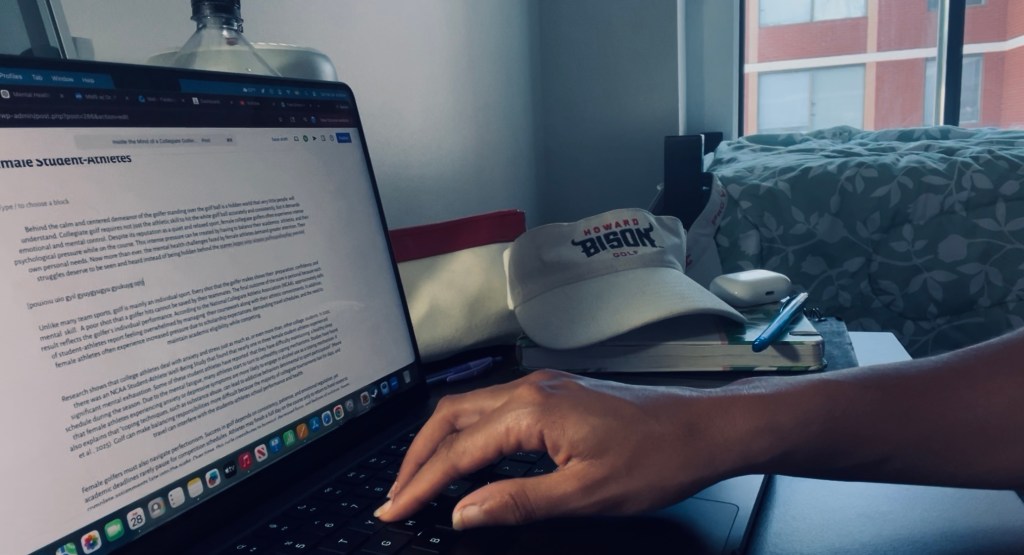
Balancing the Books and the Golf Bag
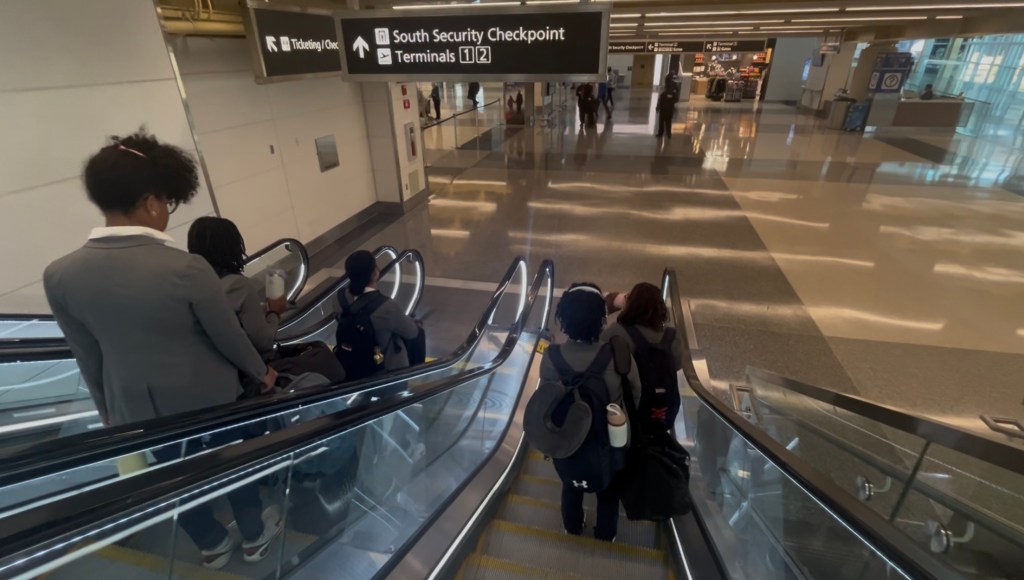
Travel, Fatigue, and the Unseen Cost of Competition

When the Round Ends but the Work Continues

The Mental Pressure Behind Every Shot
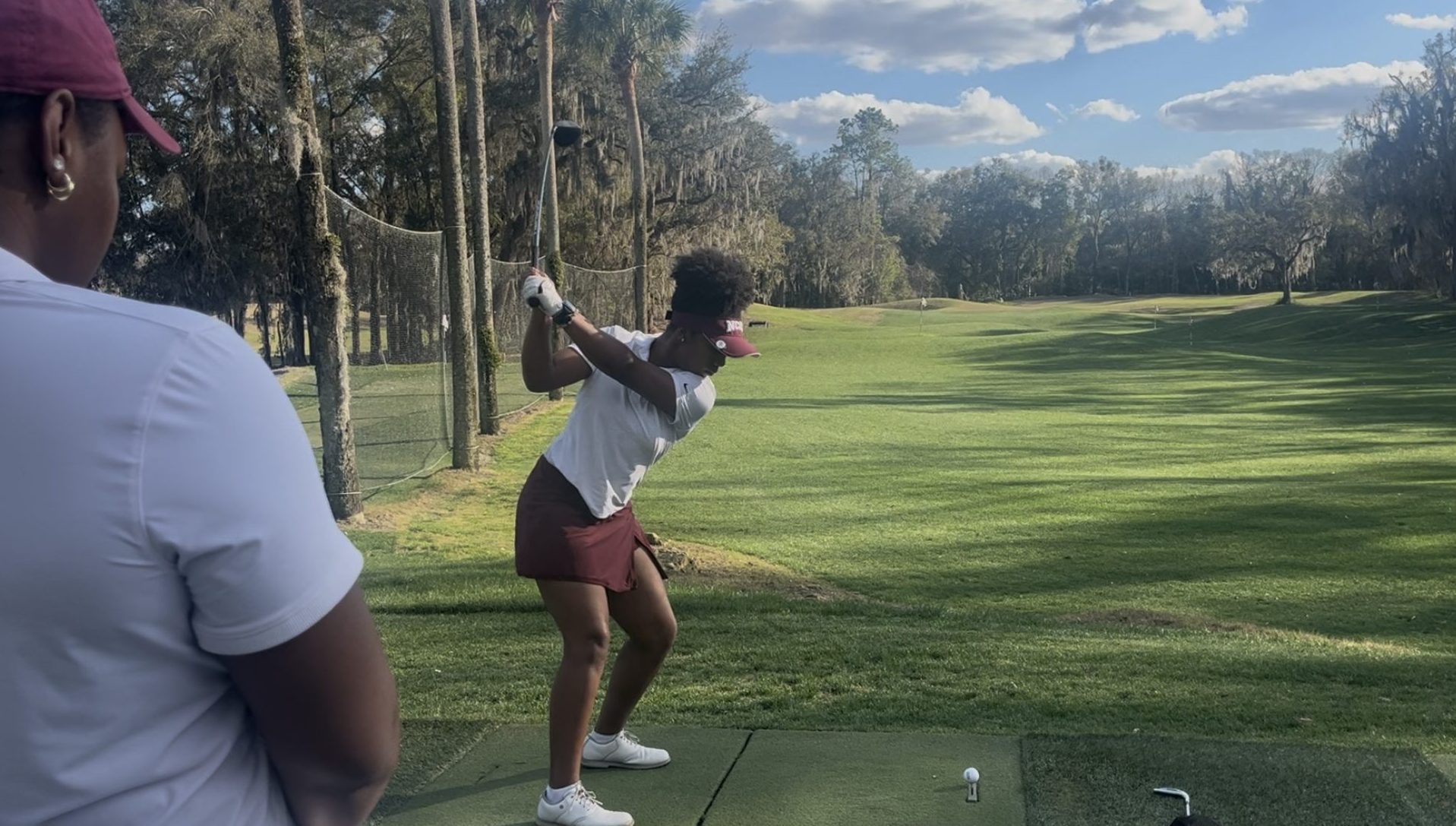
Closing Reflection: Mental Health and the Experience of Female Collegiate Golfers

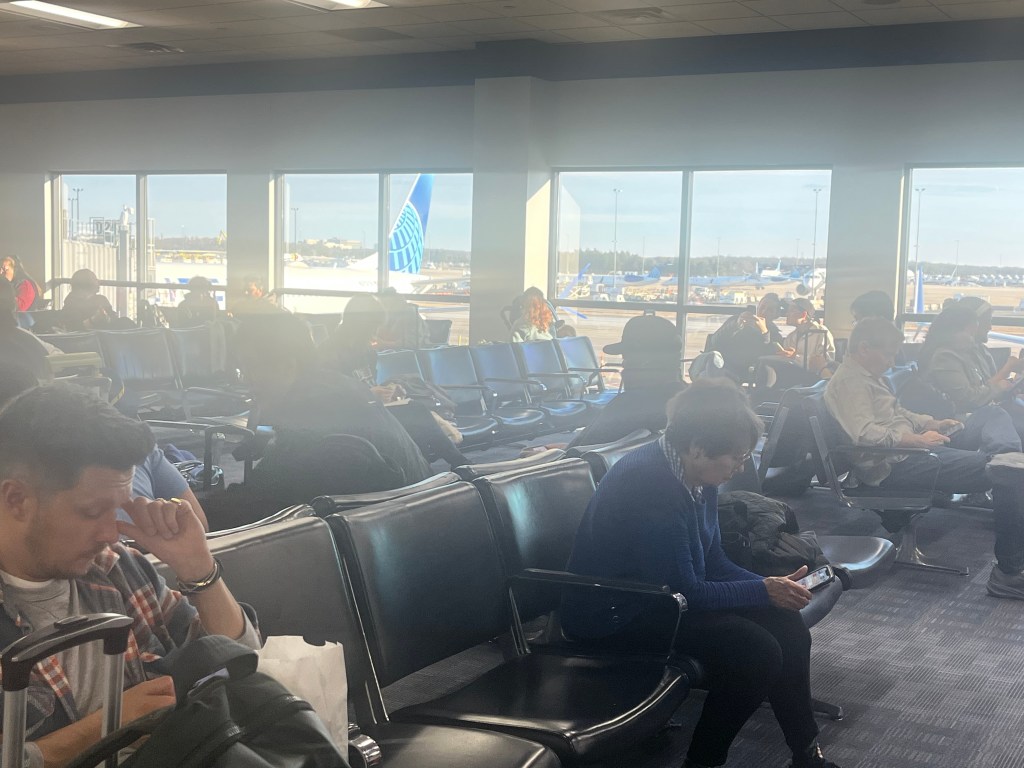
Between Departures: Moments of Waiting in the Airport

Airports are places where there is continuous movement, quiet anticipation, and inevitable long waiting. While spending an entire day traveling, I chose to center my interactive photo essay on the airport environment and the experiences unfolding within this place. This project was inspired by observing how individuals navigate shared public spaces while pursuing their destinations. Although thousands of people pass through airports daily, each person moves with a different purpose, emotion, and story.

The goal of this photo essay was to capture the rhythm of everyday life through the journey of travel. I documented the process of how passengers experience their arrival to departure. I started with checking baggage and moving through security procedures. These moments reflect structure and routine, yet they also reveal expressions of patience, stress, excitement, and anticipation. After security, travelers disperse throughout the airport in different ways. Some are walking long corridors, boarding trains or shuttles, and searching for their assigned gates. Each movement adds to the constant flow that defines navigating the airport.

I also explored how individuals spend time while waiting for their flight. Some travelers gathered in restaurants for meals, while others browsed bookstores, visited shops, or sat quietly near charging stations eagerly watching the departure screens. These activities show how airports function not only as transportation, but also as temporary spaces where people can rest and relax between destinations.

At first, I believed the airport would be an odd setting for a photo composition essay. However, this experience revealed that compelling visual storytelling can exist in the most unique environments. This assignment challenged me to look more carefully at my ordinary surroundings and transform everyday actions into something meaningful.

Throughout this project, composition became essential in shaping each photograph. I intentionally used environmental elements such as hallways, architectural structures, and lighting to guide the viewer’s attention and create visual storytelling. Techniques like framing doorways, using directional lines, and capturing movement allowed each photo to communicate a different perspective and emotion. My goal was to reveal the visual importance of everyday moments when captured through a deliberate photographic perspective.

#1. Leave Negative Space

Airplane departing into open sky above the airport runway

I used negative space by positioning the airplane in the lower corner of the frame while allowing the surrounding sky to dominate the image. The open space emphasizes the aircraft’s movement. This was taken Dulles International Airport and the technique is Leave Negative Space.

#2 . Centered Composition and Symmetry

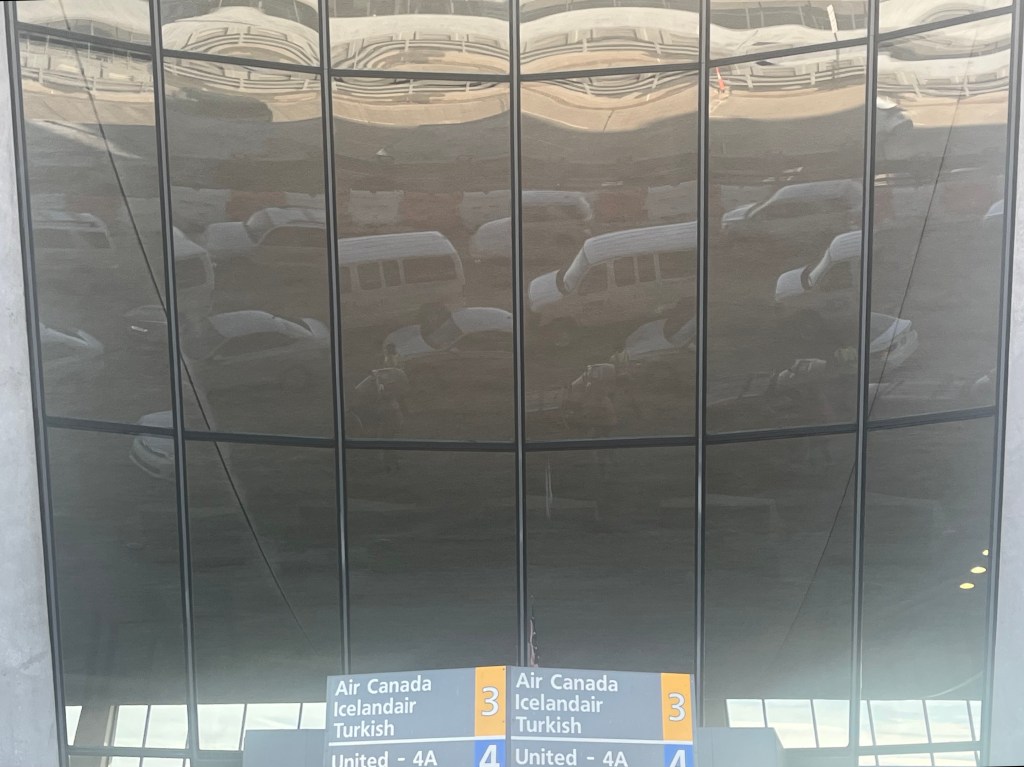
Reflections of airport traffic mirrored in the terminal’s glass exterior

This image uses reflection to create this unique visual. By using the mirrored images of vehicles and surroundings on the glass surface I was able to create photo that has depth and presents multiple perspectives within a single frame. This was taken at the Dulles International Airport and the technique is Centered Composition and Symmetry.

#3. Frame Within the Frame

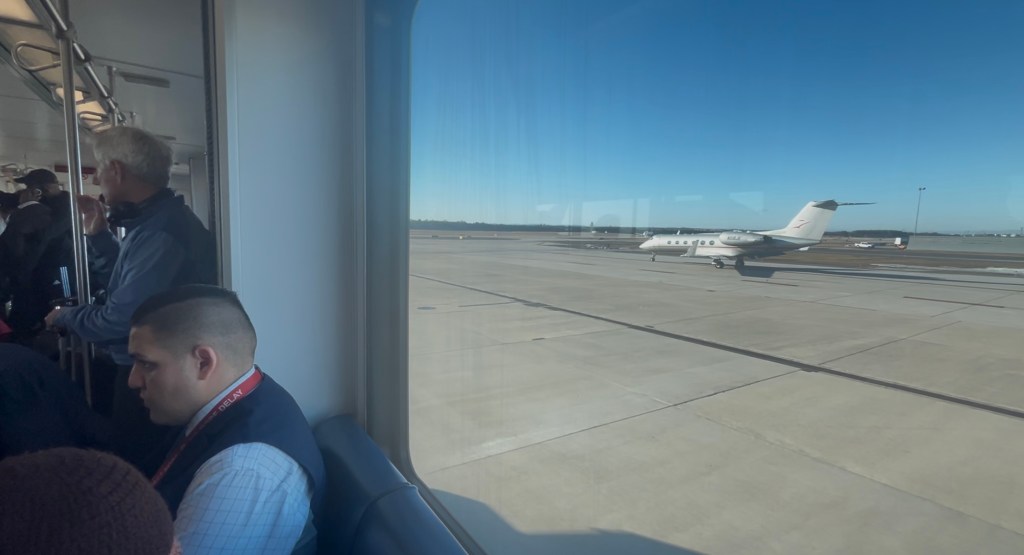
Passengers traveling through the airport shuttle while viewing an aircraft outside on the runway.

I used framing by capturing the airplane through the shuttle window, allowing the window structure to surround the subject. This creates the feeling of observing travel from within the airport environment. This was taken at the Dulles International Airport and the technique is Frame Within the Frame.

#4. Centered Composition and Symmetry

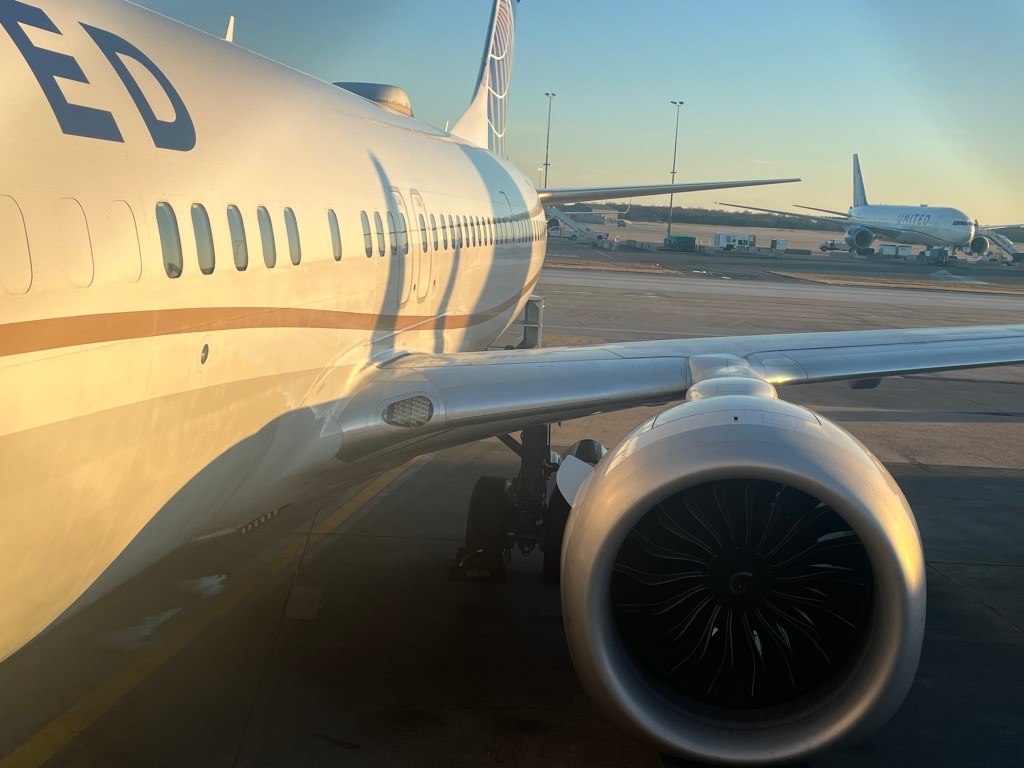
Close-up view of an aircraft engine and wing during boarding on the airport runway

Leading lines created by the airplane’s body and wing direct the viewer’s eye across the frame toward the runway and surrounding aircraft and preparation for departure. This was taken at the Dulles International Airport and the technique is Centered Composition and Symmetry.

#5. Patterns and Textures

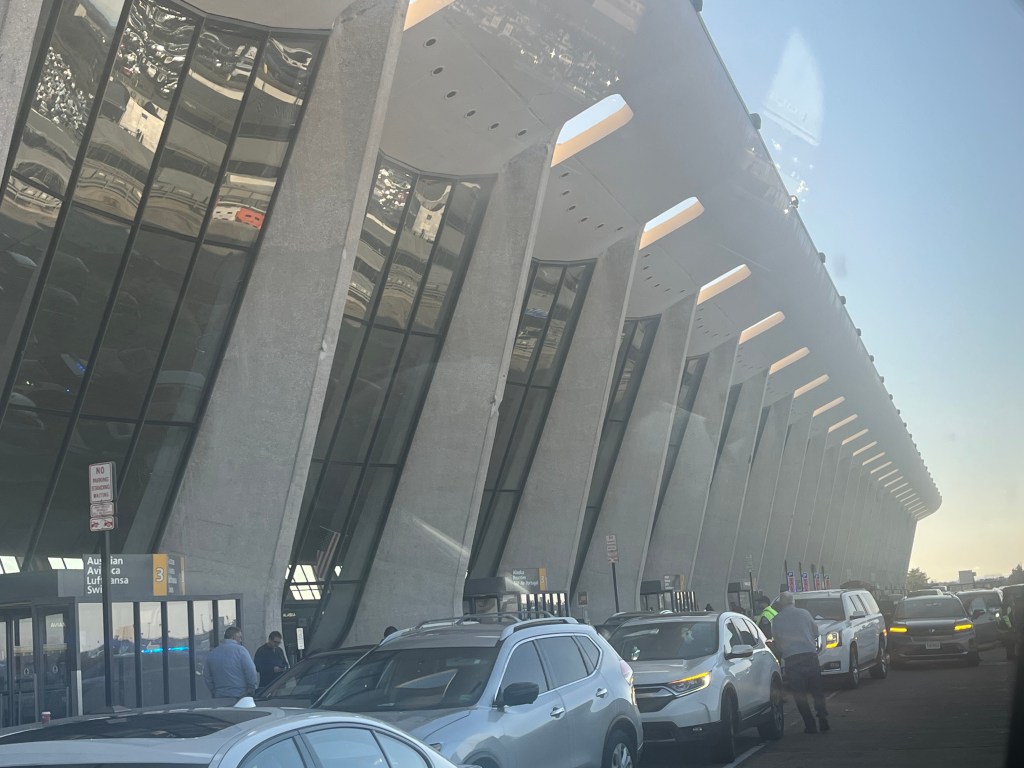
Vehicles lined outside the airport terminal entrance during passenger drop-off

I applied repetition by capturing the repeating columns along the airport exterior. The architectural pattern creates a constant organized structure. This was taken at the Dulles International Airport and the technique is Patterns and Textures.

#6. Use Black and White

Airplane going along the runway while backlit by the afternoon sun at the airport

I applied backlighting by photographing the airplane with the sun positioned behind the subject. This lighting technique creates contrast and partially silhouettes the aircraft, emphasizing its shape while adding dramatic light rays. This was taken at the Dulles International Airport and the technique is Use Black and White.

Learning the Process: Golf, Journalism, and Growth

I am Paris Fieldings, a broadcast journalism student at Howard University who also happens to play golf. As a journalism student, I have learned how to ask better questions, how to sit with discomfort, and how to turn simple moments into meaning. On the other hand, as a golfer, it has taught me something just as valuable. Because of golf, I have learned how to navigate the highs, the lows, and everything in between that this game brings. This blog exists not only as a safe space for golf and journalism, but as the crossroads where those two worlds meet.

Although golf and journalism may seem completely different, they are roughly built on the same foundation.

They both require you to trust the process.  Even though the outcome may be unclear, they both demand consistency, self-awareness, and resilience. As a golfer who had to engage in a competitive environment where performance and proof are constantly expected, journalism is definitely a change of pace for me. Golf demands more than physical skill. It requires grit, patience, and the ability to trust the process. Journalism has taught me the power of slowing down, paying attention, and allowing stories to unfold naturally instead of forcing them.

My mission in this space is not only to document my journey through golf and journalism, but to grow in how I see people and how I see myself. This blog is my safe place to reflect, learn, and tell impactful stories both on and off the course. I want my blog to be more than just fancy aesthetics and half-truths. Instead, I would like to be intentional and explore what it truly takes to grow emotionally and creatively. My mission is to share the parts of this journey that are often overlooked. 

For this semester, I would like to be challenged both emotionally and creatively. I think these are the skills that I currently need to improve on. In addition to this, I want to tell stories that do more than simply describe what occurred. I want my reporting to make people feel something and encourage them to ask deeper questions.

I hope to learn how to connect with audiences in a way that feels genuine and impactful, rather than surface level or performative.

Trusting the process.

Overall, I want to discover and strengthen my voice as a storyteller. It is easy to imitate trends or even chase approval from others, especially in media-driven spaces. However, I want my stories to sound authentic and honest, because those are the stories that truly stay with people long after they are told. This semester, I want to learn how to report with intention, write with clarity, and speak with conviction. Through this blog, I am learning how to become a stronger journalist, a more reflective athlete, and a more intentional storyteller.

More Than Pjs and Opinions: What Blogging Really Is

A blog is like a conversation. At first, I was slightly confused by what Mark Briggs meant by this statement. However, after I finished reading Chapter 5 of How to Blog, I think I understand.

Before this chapter, I believed that blogging was where you could share your personal thoughts. It was a place where you could be less formal, a little chaotic, and do journalism in your pajamas. However, Briggs explains that blogging is much bigger than that.

When reading the chapter, I found Kevin Cullen’s story particularly interesting. He wrote a blog post and a newspaper article about the exact same event. To his surprise, the blog post was better. The blog was not better because it was flashier or bolder, but because it had room to breathe. Unlike the newspaper, the blog post included personal, human details and colorful storytelling that made it stand out.

Briggs states that blogs thrive on three simple points: frequent updates, connection with analysis, and reader comments. It may seem a bit technical or even a bit boring, but once you break it down, it actually clicks. By focusing on these points, a blog becomes a public thinking space. While traditional journalism has the journalist talking and the reader listening, the blog invites everyone to pull up a chair and join the conversation, where your opinion can be heard.

Ben Mutzabaugh, USA Today’s business travel blogger, states that “readers are our friends.” In fact, readers help make the blog stronger than any author could alone. Because of blogs, the audience is not just a shadow anymore. Instead, readers become co-builders. They not only support the author, but sometimes even help shape the content. In a way, this can be both beautiful and terrifying, because a blog does not let you hide. Blogging showcases not only your voice, but your blind spots, your curiosity, your mistakes, and your growth in real time.

Briggs does not romanticize blogging at all. He emphasizes that it is hard work and recommends posting at least once a day. While this advice can already feel exhausting, he offers a different perspective. He suggests that a blog can become your notebook, a cozy home for your ideas and emotions. Why wait to share information until it is “perfect”? Allow readers to challenge your ideas or your story. After all, journalism is never truly finished. It is a narrative that constantly keeps evolving.

Perhaps that is the main lesson of the chapter. Blogging is not just what you write. It is how you stand before your readers, open and human. Briggs firmly believes that blogs are more authentic. They are plain, yet honest. Blogs are available to anyone who can type, click, and publish.

Overall, blogging may appear simple at first, but it reveals much greater depth once you truly engage with it. As Mark Briggs suggests, a blog is just a conversation. However, blogging only reaches its full potential when presence matters more than perfection. By inviting dialogue, connection, and shared perspectives, blogging creates a space where voices meet, ideas evolve, and stories continue to grow.

Blog at WordPress.com.

Up ↑